This page contains the following articles. You can click to jump to each section.
General Attire Guidelines
Having the right look at work is very important. Appropriate attire will depend on your particular work situation but here are some general guidelines for everyone:
- Have indoor shoes to wear at school (most teachers wear runners)
- Have indoor / gym shoes for assemblies (different from your indoor school shoes)
- Take a hand towel to dry your hands after going to the toilet
- Wear a suit or the equivalent for special events such as graduation and opening ceremonies
- Use a hat, sunscreen, and sun-blocking arm covers when spending time outside
- No slits / rips in clothing
- Tops should cover shoulders.
- No low cut or cropped tops- don’t show your chest or belly (utilize camisoles/under shirts)
- No tight/body-hugging clothes
- Wear light cardigans over sleeveless shirts
- Skirts / shorts should cover or reach the knees (wear leggings / tights at ES)
The best advice I got related to clothing was to dress on the formal side for the first week or two until you can gauge the formality level of the other teacher’s clothes. Then match them. You can also consult your supervisor on what is deemed appropriate or not at your school, including in regards to piercings and tattoos (tattoos will generally need to be covered with sleeves or bandages). The expected formality level can greatly vary between schools, but generally senior high schools are more formal and elementary schools are less so.
For suggestions on where you can buy appropriate workwear please jump to the bottom of this page. There are also tips for dressing for the heat/cold.
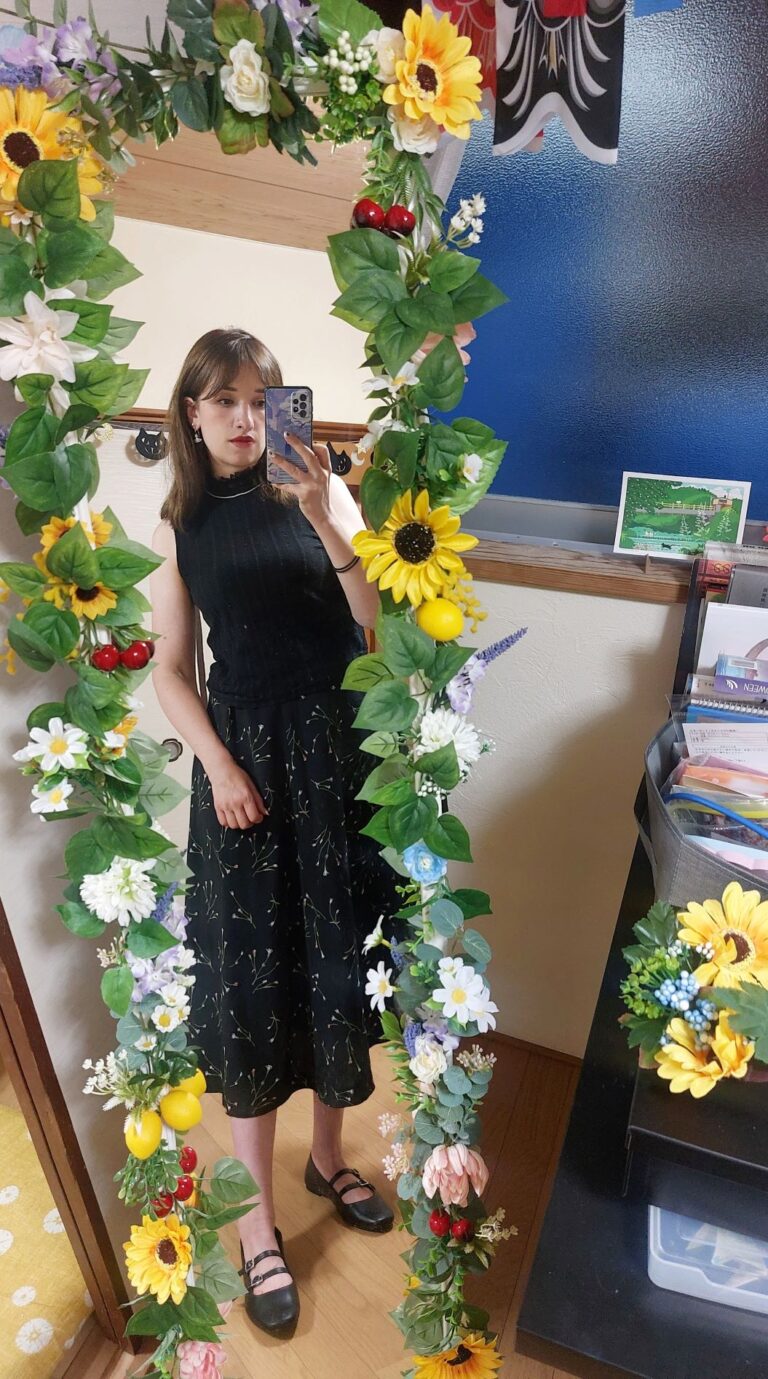
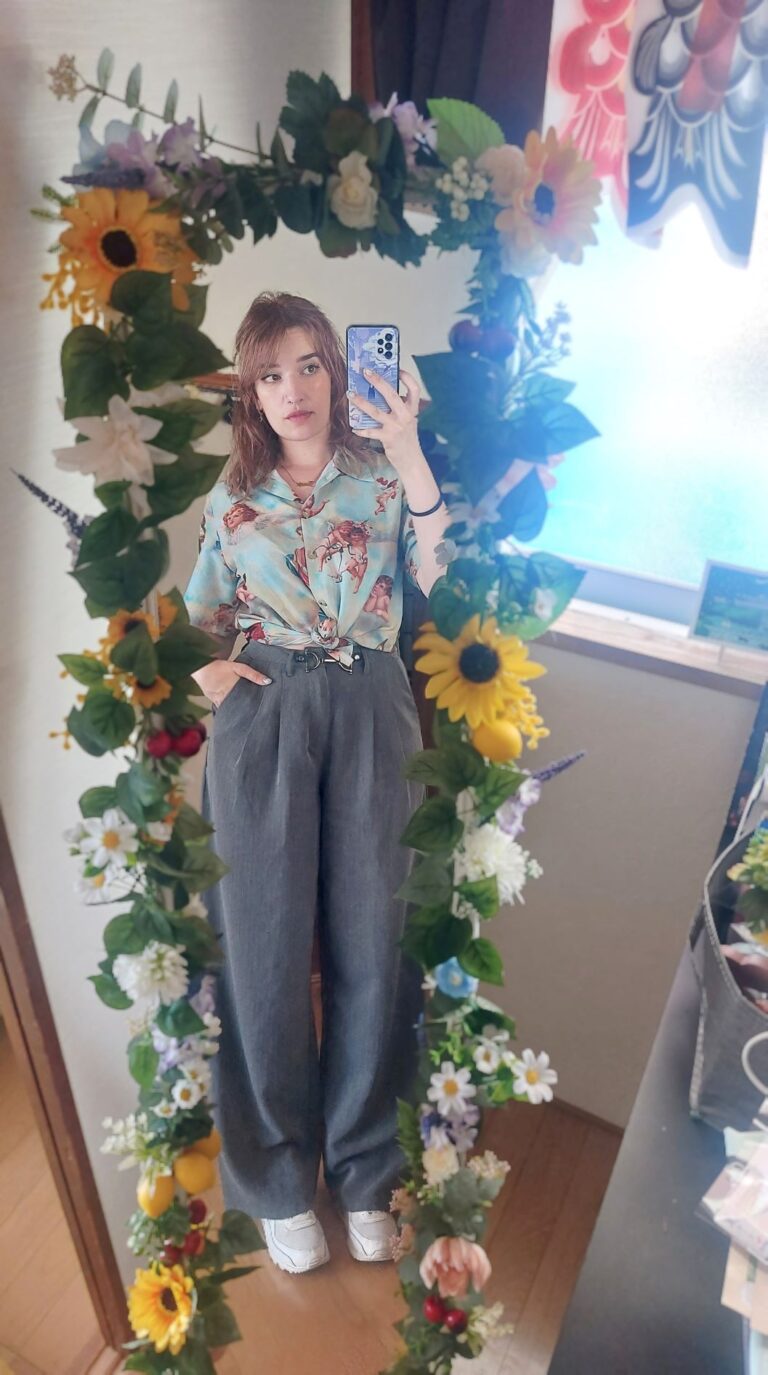
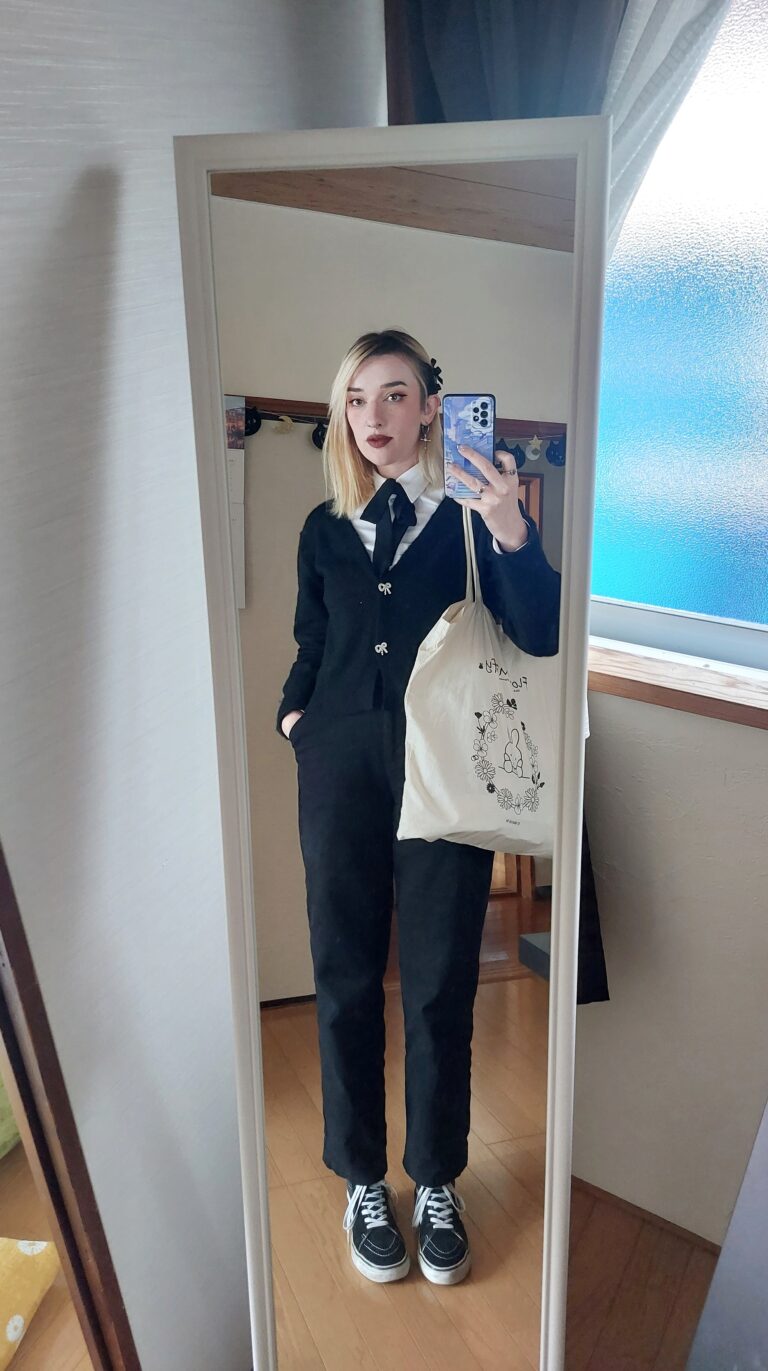
Ladies’ Attire – ES and JHS
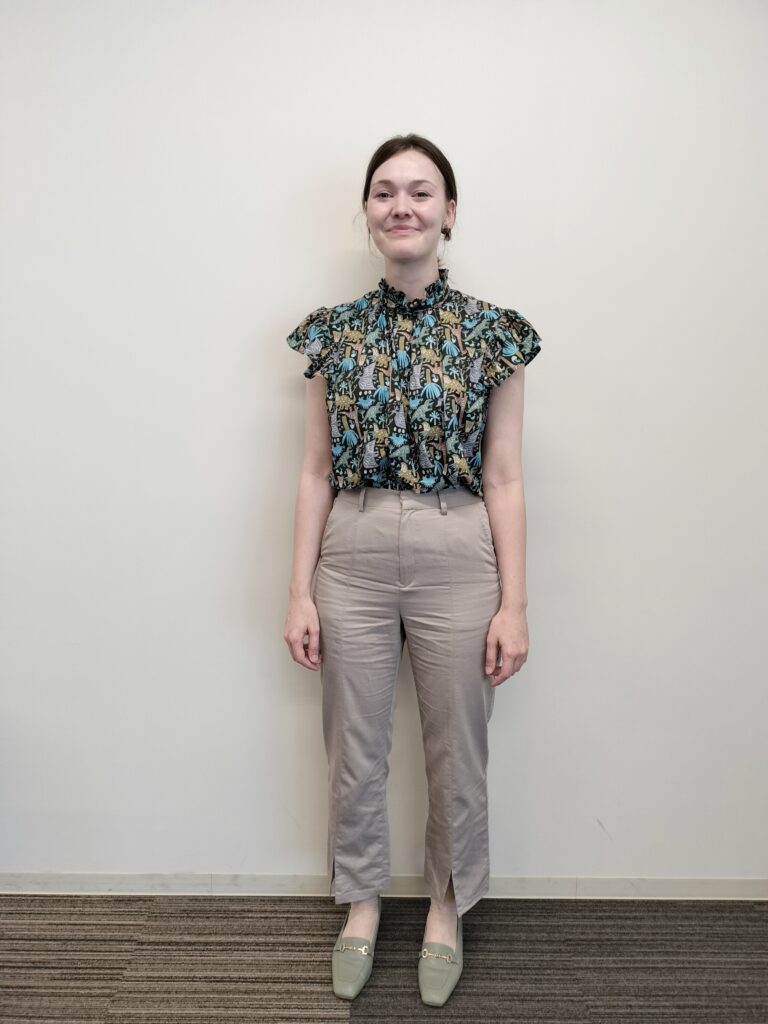
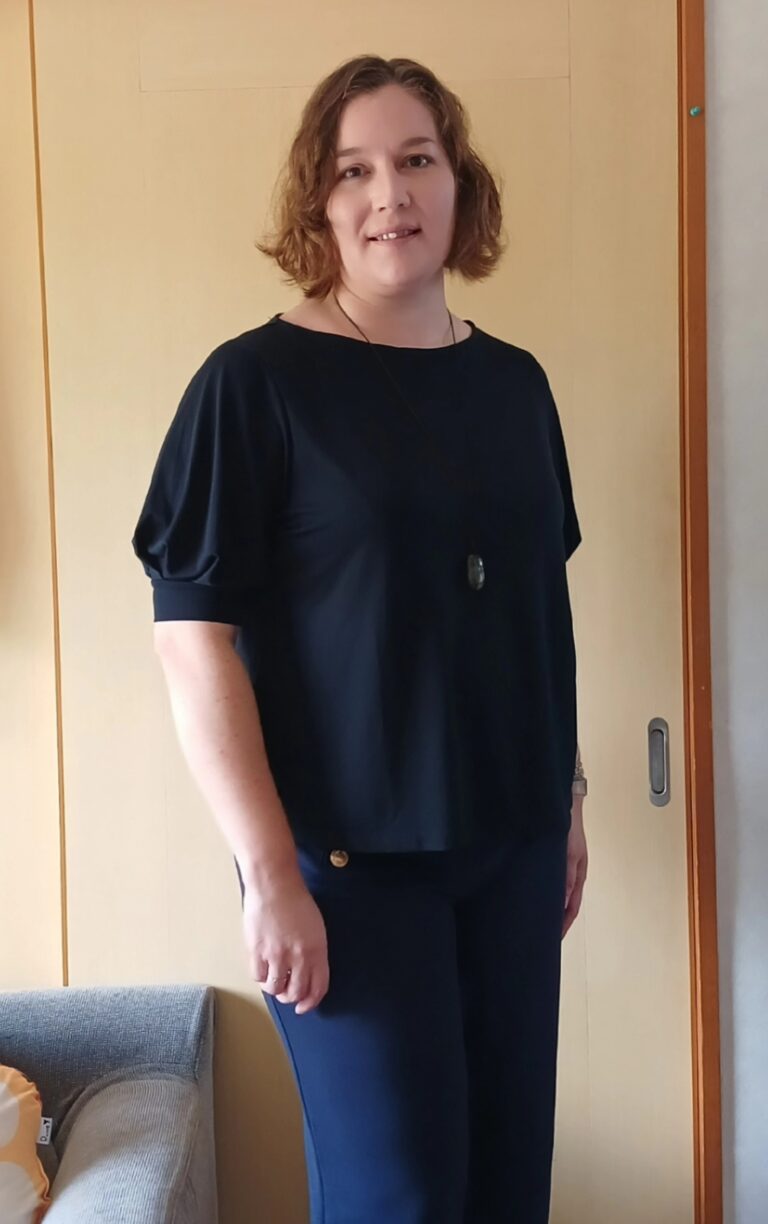
“Both my JHS and ES have teachers who dress more formal and those who dress very casual, so I dress somewhere in between. In the summer, I usually wear light (loose) cotton shirts with dress pants or dressy-looking athletic pants. I also sometimes wear loose-fit dresses with cooling leggings underneath. I always wear an under shirt in case my shirt rides up and shows my belly (and also to avoid sweat stains!). At my JHS I tend to stick with blouses, but usually wear solid coloured T-shirts at my ES.
In the winter I usually wear dress pants and a thick sweater, usually with heat-saving leggings and long-sleeves underneath. When it gets really cold I add a light down jacket on top. You can pick up cooling layers (airism), heating layers (heat tech) and affordable down jackets from Uniqlo.”
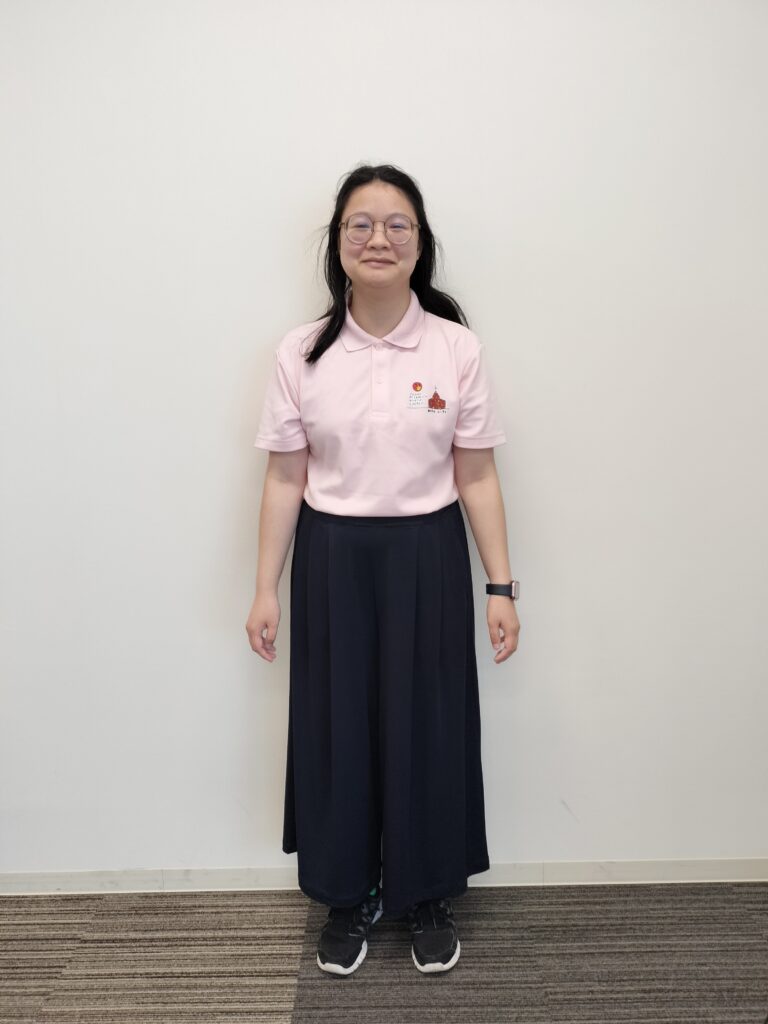
“This is what I usually wear at my ES/JHS in the summer. It’s a simple polo with long, flowy pants. It gets humid here, so the school lets us wear “cool biz”.”
Ladies’ Attire – SHS
“I wear dress pants and a combination of different tops to school. I have shorter sleeve shirts in the summers, something that is breathable but doesn’t show sweat easily, whilst in the winter I have cotton long-sleeved shirts and I typically wore a scarf and a jacket. Some schools are more relaxed on dress code than others, but as long as its appropriate, subtle and modest, I think you should wear clothes that make you feel the most comfortable in any weather or situation.”
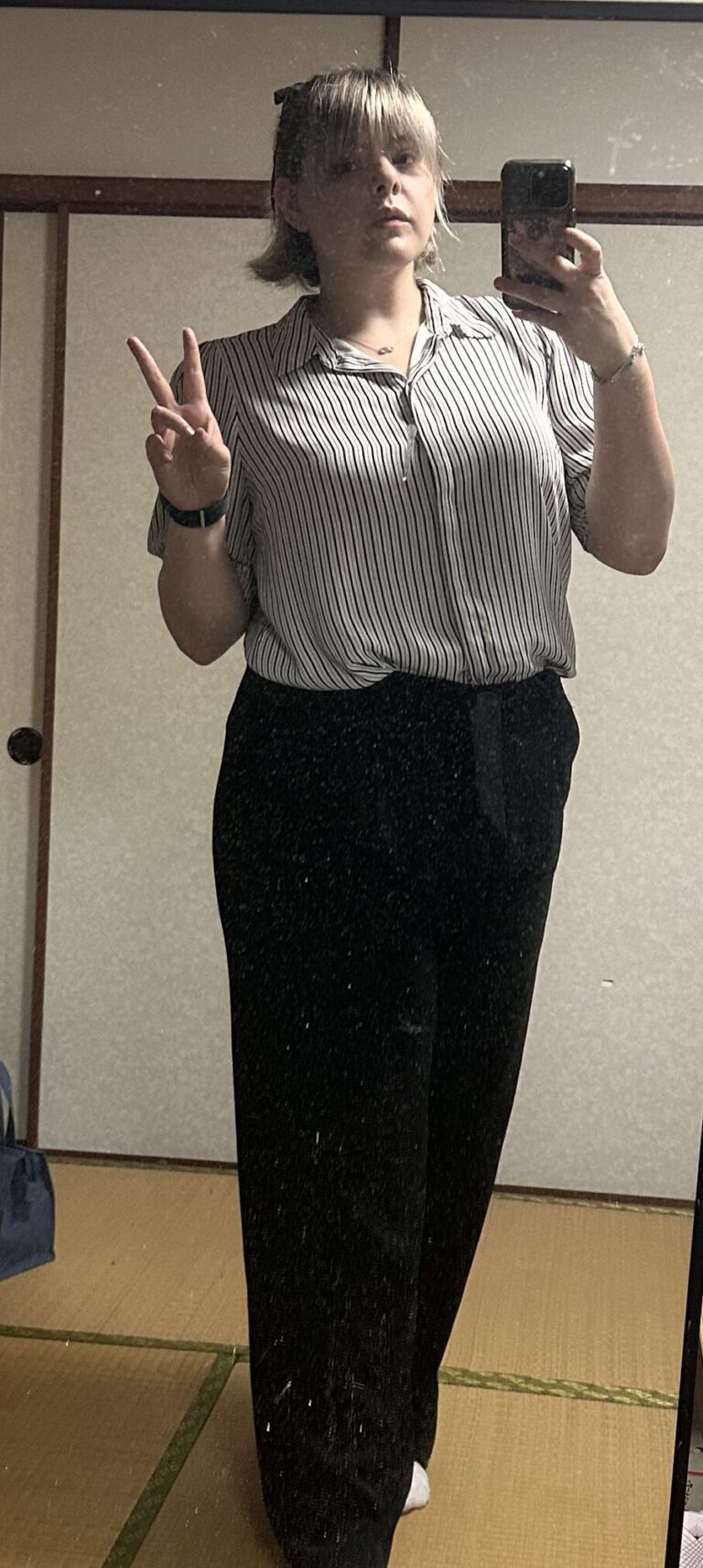
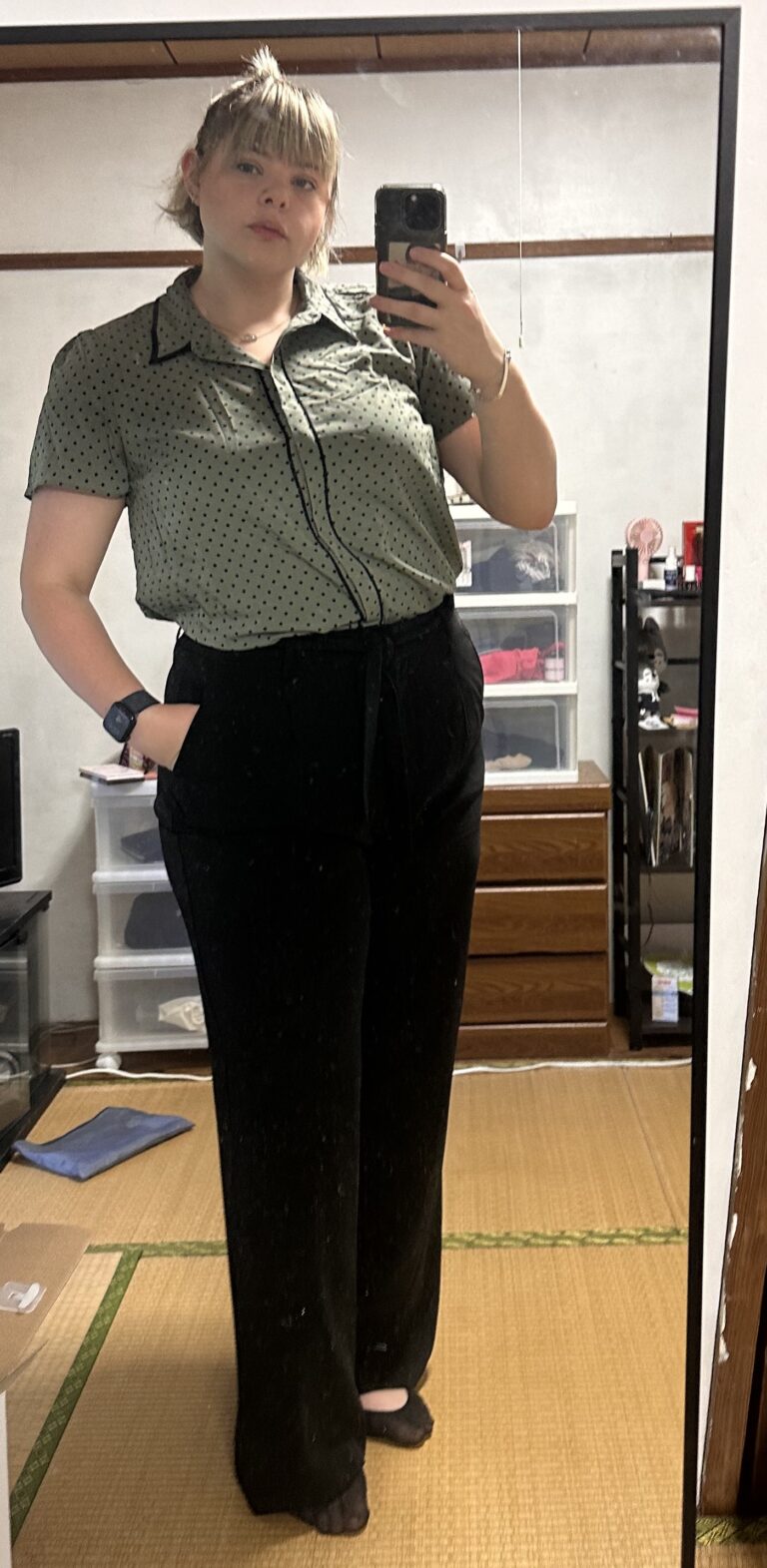
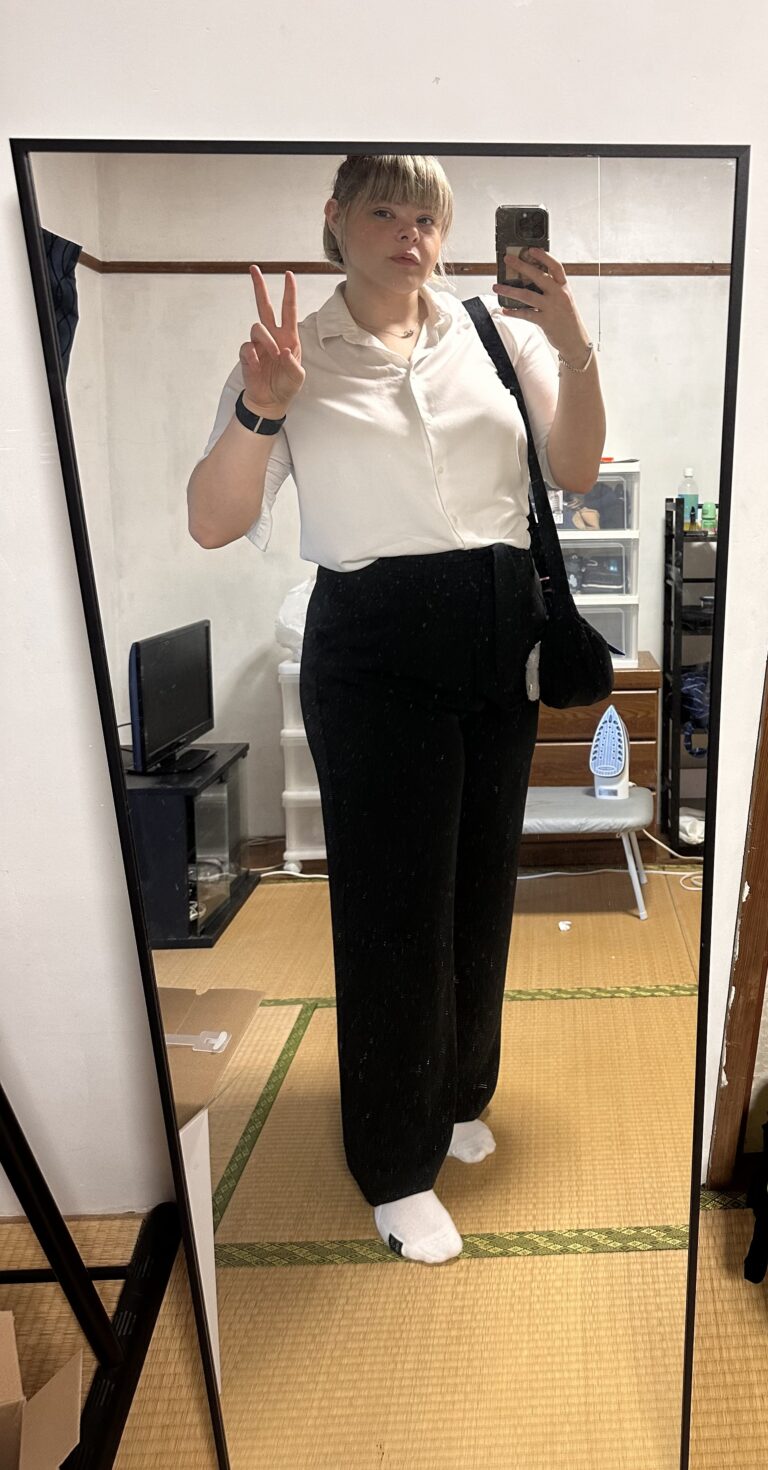

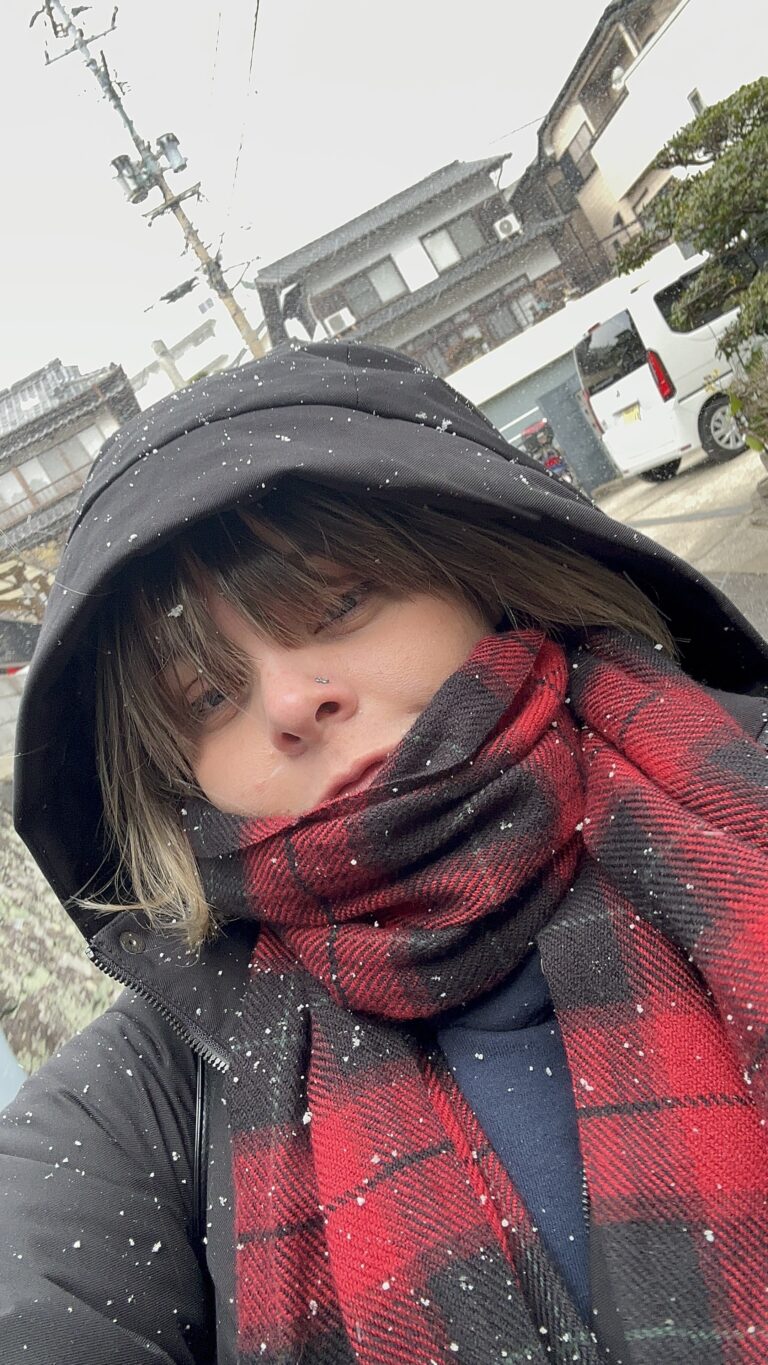
“At my senior high school, things are generally pretty easy going. The best idea is to wear business in your first week, but mid summer in a suit is quite frankly impossible. So a good idea is a blouse and long pants. Choose clothing on the less fitted, more relaxed side. Fitted clothes are not good in summer, but also probably not appropriate. Japanese fashion leans towards a looser fit, so it’s good to follow that route. Anyway, check what you’re English teachers are wearing, and try to always be dressed at least according to what they wear. Knee length shirts or longer, and long pants are perfect. Any modest, neat top is okay. Winter I wear a lot of sweaters. It’s good to have at least one suit for important days like opening ceremonies and graduation.”


Ladies’ Attire – CIR
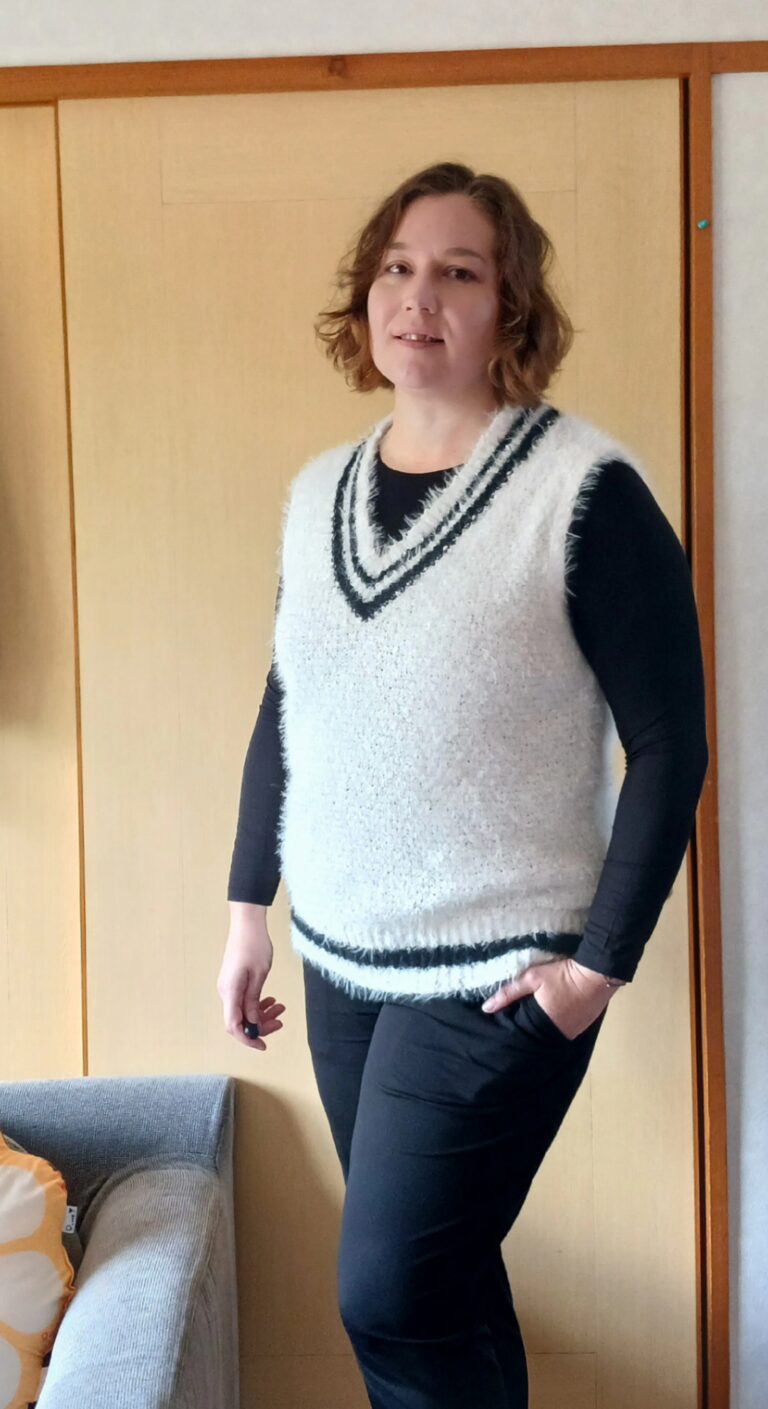
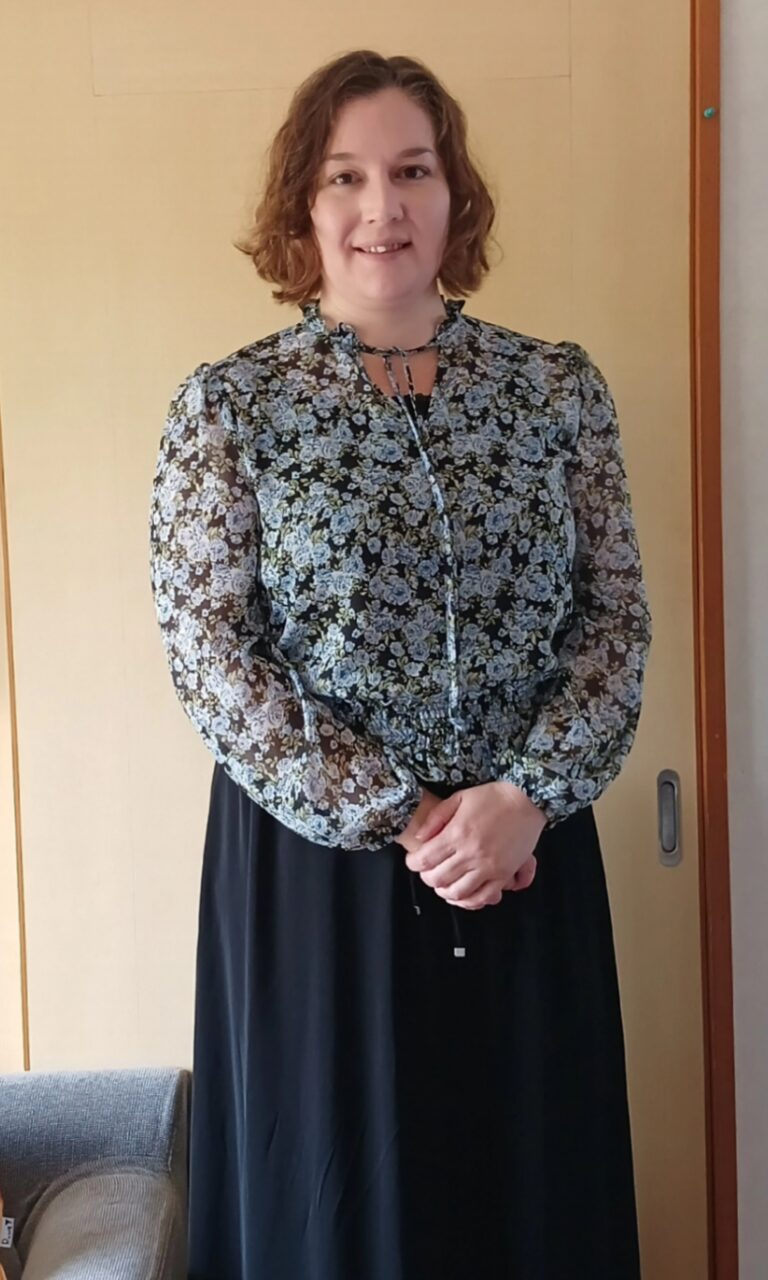
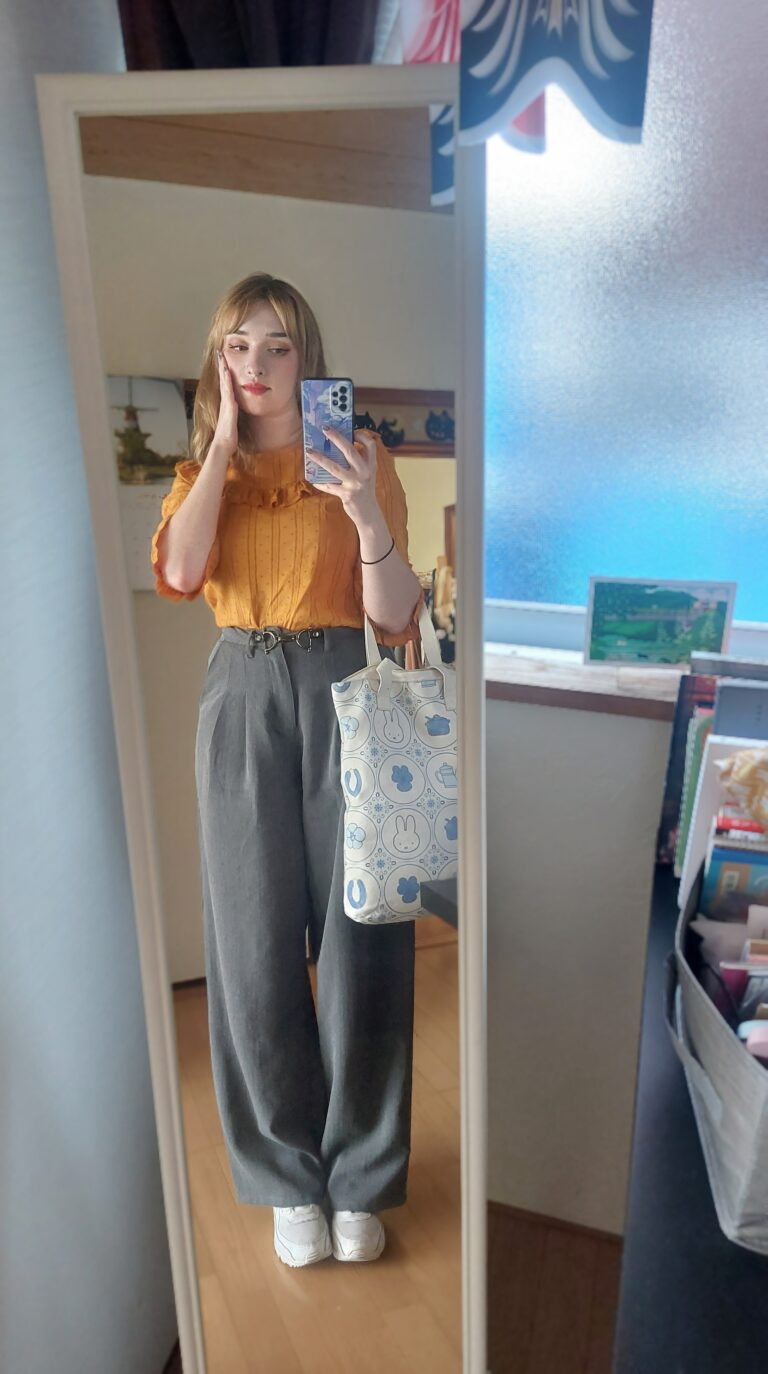
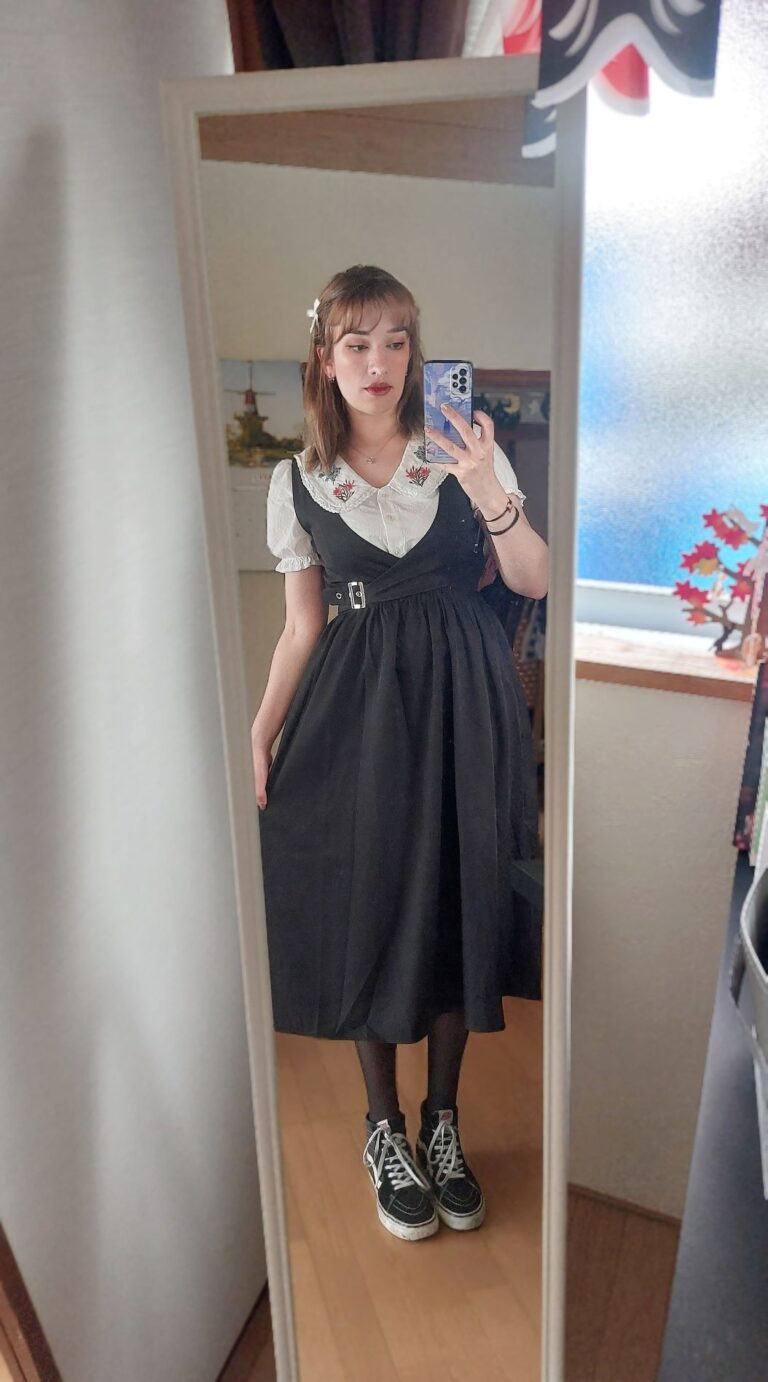
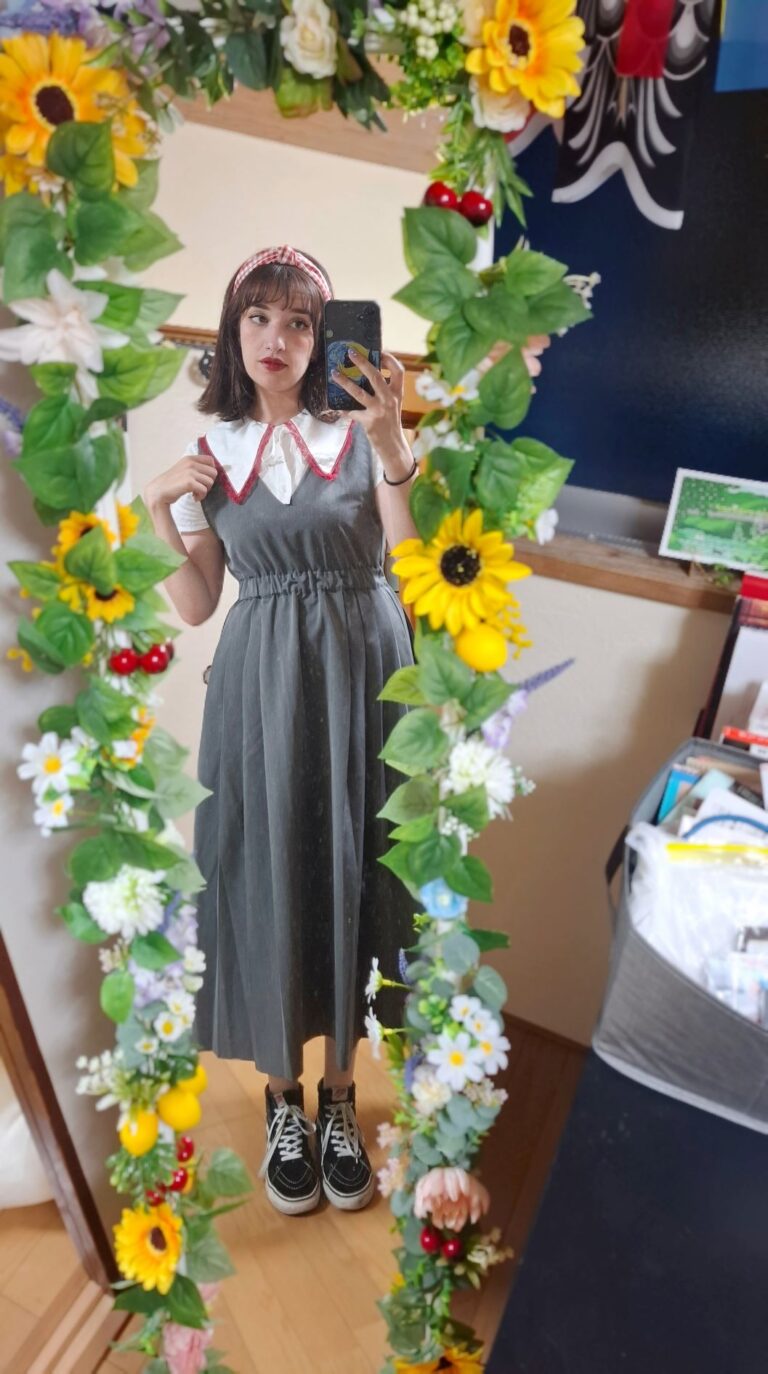
“I’m a CIR working at Hirado City Hall. I wear knee length or longer skirts/pants, and no jeans, brand prints, band shirts etc.”


Gents’ Attire – ES and JHS
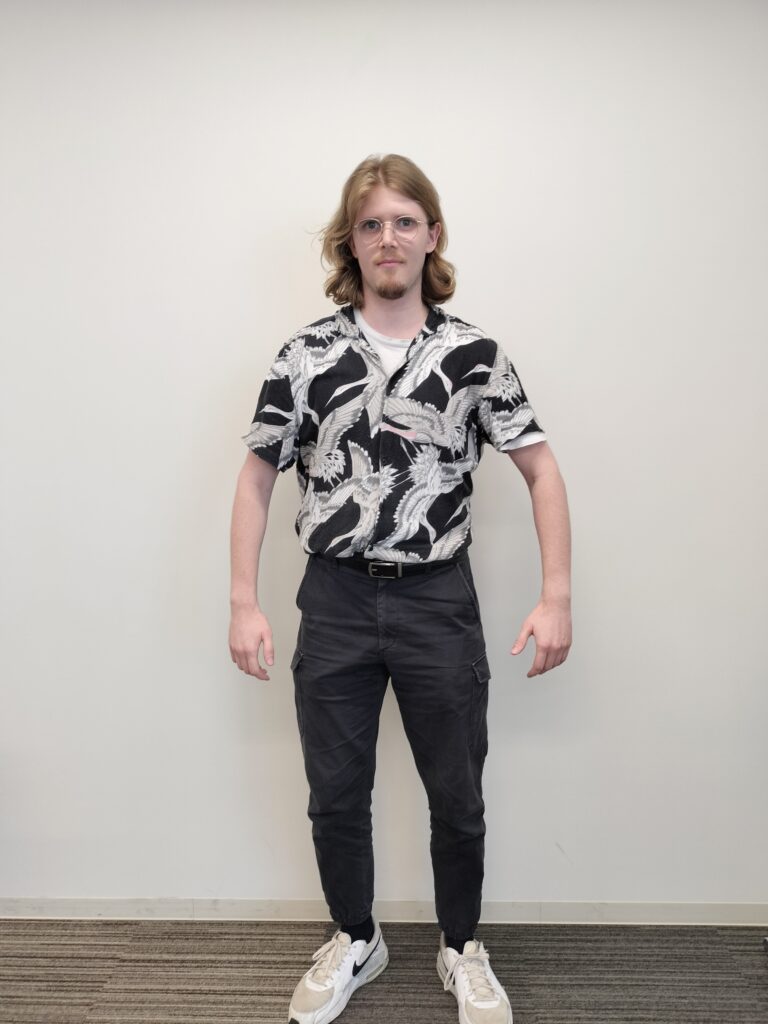
“In the summer I’ll usually opt for a short-sleeved collared shirt, black or beige chinos, and an undershirt. I’ll usually keep the shirts plain but have been fine in the past wearing some with prints. I keep a tie and suit jacket at school for anything that might require something more formal.
For winter I stick to the collared shirts and chinos but throw on a sweater when it gets particularly cool. I have also been fine wearing turtlenecks with a suit jacket.”

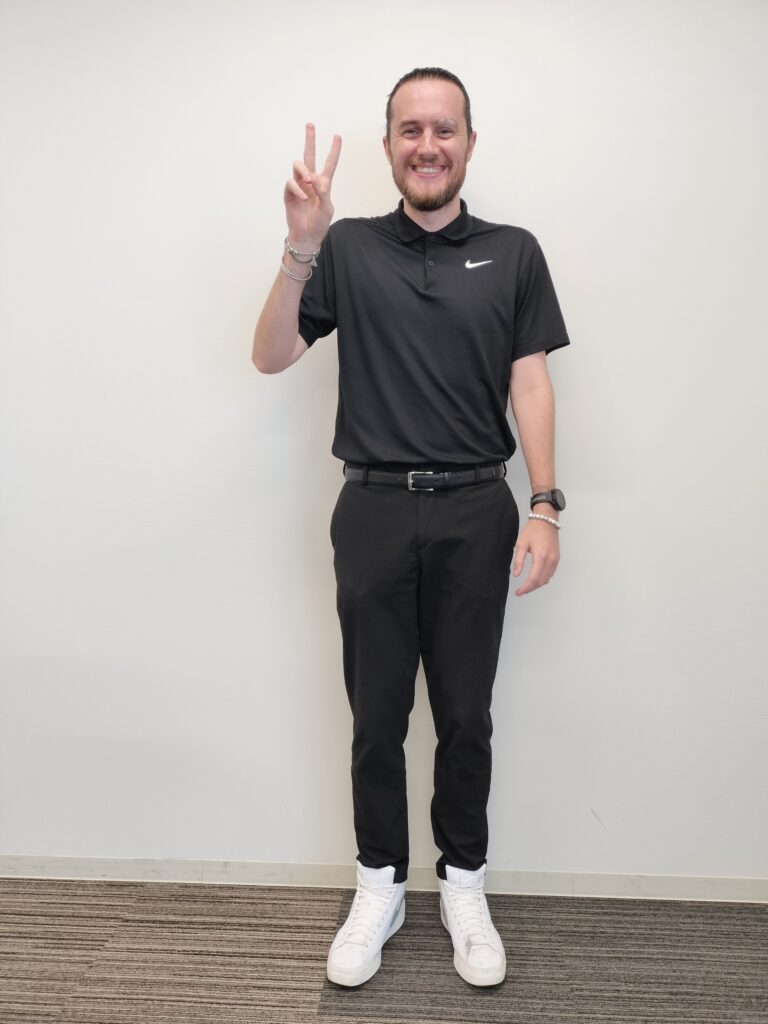
“In the summer I wear suit pants with a polo/golf shirt. Never had any complaints or questions about it. Pretty simple 🙂 The only time I’ll wear a suit is for the different ceremonies we have or observation lessons.
In winter, I’ll wear suit pants and a jumper. Also simple :)”
Gents’ Attire – SHS


“The basic rule is a shirt with a collar and long pants all year. Short sleeves for summer, long sleeves for winter. When they start switching the air conditioning from hot to cold, it’s probably fine to start wearing cool-biz (summer) clothes. Ties/blazer are optional, but I usually only wear them for formal events such as graduation ceremonies.
Since it’s all ESID, my advice to new ALTs is come dressed smart on your first day then guage what the other teachers are doing.”
Gents’ Attire – CIR
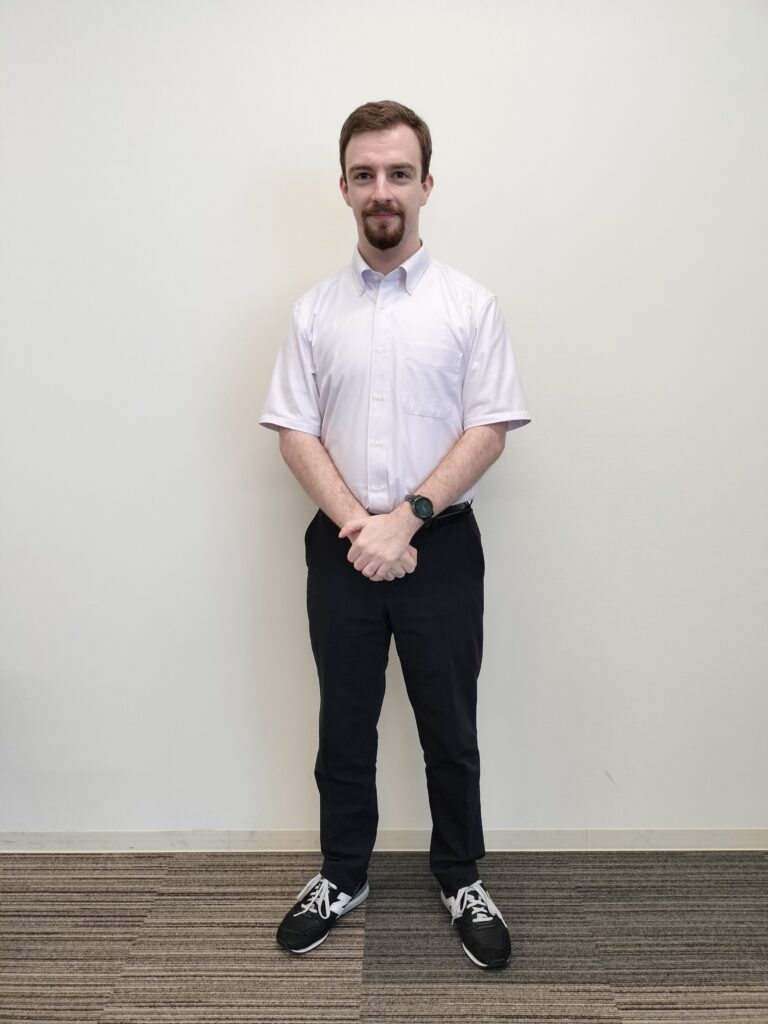
“I work at the Nagasaki Prefectural Office as a CIR. Aside from days where I need to suit up in a full suit with a jacket, tie, and leather shoes, I usually just wear a dress shirt (short sleeves for the “cool-biz” summer season, long sleeves for when it’s cooler), “kandou” stretchy suit pants from Uniqlo, and a pair of plain (waterproof) sneakers. It’s also imporatant to wear an undershirt (肌着 / hadagi) as most dress shirts are slightly see-through, and they also help keep you comfortable when it’s hot.”
Where to Shop for Work Attire
In-Person:
- UNIQLO
- GU
- AEON malls
- Shimamura
- Recycle (2nd Hand) Stores- 2nd Street, Hardoff
- Topshop
- Aoki (suits)
Online:
- Amazon
- Rakuten
- Yahoo Shopping
- Dorothy Perkins
- ASOS
- New Look
- Home-country chains that ship internationally
Shopping for Shoes
Women’s shoes usually only go to a size 25 (cm). This is equivalent of a US 8.5, EU 39. However, there are some shops that will go to a 26 or an LL if you look around. For example, ABC Mart and Oriental Traffic.
Men’s shoes usually go to a 27, US 9, so if your feet are bigger than this you may struggle to buy shoes in a store near you.
If you were blessed with feet that do not fit Japanese norms then consider ordering online from either Amazon or Rakuten.
Cool Biz
Cool Biz refers to the business style worn in Japan in the summer. It was an initiative started to reduce electricity costs for cooling by allowing employees to wear lighter clothing in the warm months. The Cool Biz season is generally from May to September.
Cool Biz for men: generally, a short-sleeved dress shirt with chinos and no tie. A business jacket is also not used in most occasions.
Cool Biz for women: generally, a short sleeve (not sleeveless) blouse with light dress pants or a skirt. A business jacket is also not used in most occasions.
Many stores selling business attire will have a Cool Biz section in the summer. You can also google “Cool Biz” to get some ideas!
Dressing for the Nagasaki Climate
Japanese schools tend to not have cooling/heating in the hallway and may limit the AC/heating use to specific times of year. The gyms are also not generally heated/cooled. So, it is very important to dress for the weather.
Tips for Summer
Japan is very hot and humid in the summer. Wear loose clothing made from natural fibers, such as cotton, to keep cool. Undershirts will help soak up sweat, and you can buy undershirts that react with moisture to cool down your body. That said, once the AC is in use, the staffroom and classrooms can get a bit chilly. I keep a light sweater at school in case I need an extra layer those days. If you find the staffroom hot, you can keep a small fan at your desk. We have a list with other cooling product suggestions on our Summer Selfcare page.
The UV is also very strong in Japan. If you will be spending time outside (such as playing with students during afternoon break) it’s a good idea to wear a hat and sunscreen. I keep both in my desk just in case!
Make sure clothes are completely clean and dry before storing them in your closet. Also make sure to clean your washing machine periodically. Mold and bacteria are quick to spread in Japan, and can quickly cause garments to smell. See our Ultimate Cleaning Guide for more info.
Japan also has a rainy season at the beginning of summer. Make sure to have clothes that dry quick (or something to change into). A pair of rainboots and an extra pair of socks is also a good idea!
Tips for Winter
Winter can get quite chilly in Japan! Even if the temperature isn’t that low, the humidity can make it feel bone chilling. The best defense is to dress in layers. You can buy thin heat-capturing underlayers (such as Uniqlo’s “heat tech”) that make a huge difference. Most teachers also wear a fleece or down jacket in the school. You can even get some that are thin enough to wear under a suit jacket. Classrooms are generally heated, but the hallways are not.
If you get cold easy, I also recommend keeping a small blanket at your desk to put on your lap for the periods you spend in the staffroom.